Global buyers are entering 2026 with higher expectations for Organic Ingredients. They want clean labels, stable supply, and evidence behind every claim. Price still matters. It is not the only concern.
Dr. Jessica Shade, an organic agriculture scientist and former Director of Science Programs at The Organic Center, says, “Organic farming is not just about replacing one input with another; it is about managing the whole farm ecosystem.” This principle should guide ingredient selection. Buyers must examine soil practices, approved inputs, processing methods, and farm-level traceability. A certificate alone may not explain everything. It can confirm compliance, but it may not reveal seasonal shortages, transportation risks, or inconsistent quality between harvests.
The strongest 2026 opportunities may include organic turmeric, ginger, cocoa, vanilla, chia, coconut, and botanical extracts. Each ingredient needs a different review. Turmeric requires attention to curcumin content and contamination testing. Vanilla needs reliable curing records and careful origin verification. Cocoa buyers should examine farmer relationships, fermentation quality, and supply continuity. Small details matter.
Ask direct questions. Who grew it? Where was it processed? Which tests were completed? Can the supplier provide current certification documents and batch records? Some buyers may overtrust attractive sustainability language. That is a weakness worth admitting. Organic Ingredients sourcing is not perfectly simple, either. Documentation can be incomplete, and audits can miss local realities. Responsible buyers should compare evidence, visit suppliers when possible, and keep reviewing their decisions. Credibility grows through repeated verification, not polished promises.
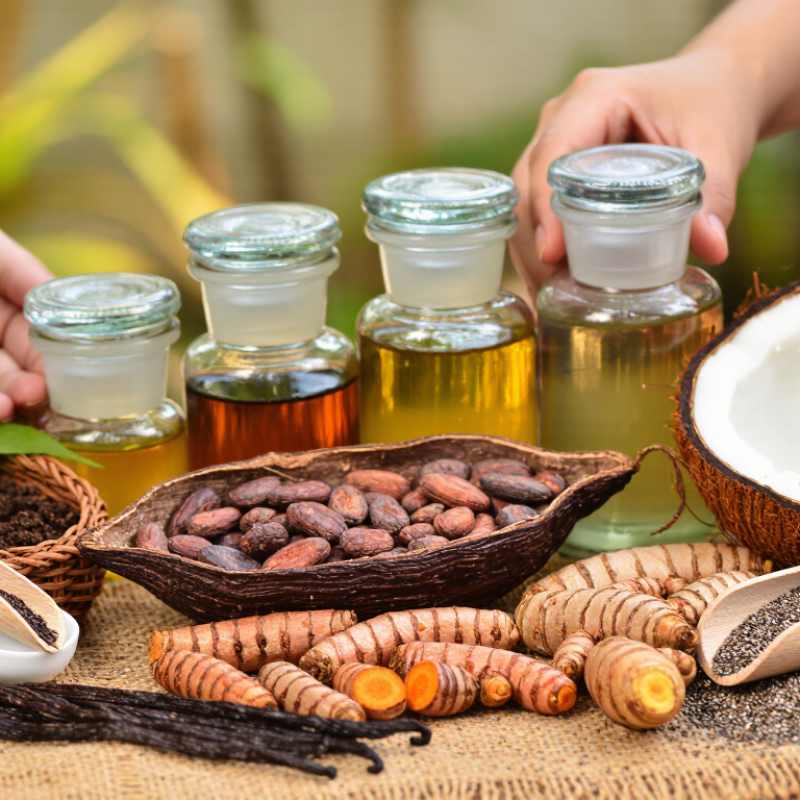
2026 Best Organic Ingredients for Global Buyers?
The global organic market reached €136.4 billion in 2023, according to the FiBL–IFOAM Organics International survey. Organic farmland covered about 98.9 million hectares worldwide. These figures show strong demand, but they do not guarantee easy sourcing. Buyers still face uneven supply, changing standards, and transport delays.
For 2026, practical choices include organic cocoa, herbs, spices, coconut products, pulses, and cold-pressed oils. Each ingredient needs more than an organic certificate. Buyers should check pesticide residue tests, moisture levels, allergen controls, and lot-based traceability. A clean ingredient can still fail if storage conditions are poor. Small details matter.
The Research Institute of Organic Agriculture also reports millions of organic producers across global markets. This creates opportunities for direct, transparent supply chains. However, “best” depends on climate, processing capacity, price, and destination rules. I would not select an ingredient only because its market is growing. A low-cost crop may create inconsistent quality. A premium crop may remain too seasonal for large contracts. Supplier audits and independent laboratory checks reduce that uncertainty, although they cannot remove it completely.
2026 Best Organic Ingredients for Global Buyers?
How Global Buyers Rank Ingredients by Demand, Margin, and Supply Risk
Global buyers are ranking organic ingredients through three practical measures: demand, margin, and supply risk. Demand shows how quickly an ingredient moves across food, beverage, and personal care markets. Margin matters because certification, testing, freight, and storage can reduce apparent profit. Supply risk reflects climate exposure, harvest cycles, processing capacity, and export reliability.
Organic turmeric and ginger often score strongly on demand. Buyers use them in teas, supplements, sauces, and functional beverages. Their margins can remain attractive when buyers secure consistent color, moisture, and particle size. Supply risk is moderate, but weather can change prices quickly. Organic cocoa may offer strong demand and margin. However, crop disease, rainfall, and limited certified supply create greater uncertainty.
Real procurement reviews require more than a spreadsheet. I compare three years of purchase data, supplier audit results, and shipment performance. A clean certificate is not enough. Buyers should inspect residue reports, lot traceability, packaging conditions, and delivery history. Small details matter, such as damp cartons at a humid port.
The ranking is not perfect. Demand forecasts can fail. A popular ingredient may become expensive before contracts are renewed. Some buyers also overvalue margin and underestimate rejection costs. A safer approach uses quarterly supplier checks and backup origins. Not every low-risk ingredient is profitable. Not every high-margin ingredient deserves a long-term contract.
| Rank | Organic Ingredient | Main Commercial Formats | Demand Score / 5 |
Margin Score / 5 |
Supply Risk Score / 5 |
Priority Score / 5 |
Typical Origin Regions | Why Global Buyers Consider It | Key Supply Checks |
|---|---|---|---|---|---|---|---|---|---|
| 1 | Turmeric | Dried fingers, powder, standardized extract, oleoresin | 5 | 4 | 3 | 4.10 | South Asia and Southeast Asia | Broad use in supplements, functional beverages, foods, and natural color systems. | Curcumin assay, heavy metals, pesticide residues, adulteration, drying quality, organic chain of custody. |
| 2 | Ginger | Fresh root, dried slices, powder, juice, extract | 5 | 4 | 3 | 4.10 | Asia, East Africa, and Latin America | Established demand in beverages, confectionery, culinary products, and digestive-health formulations. | Moisture, microbial load, pungency, pesticide residues, aflatoxins, crop-year consistency, cold-chain needs for fresh root. |
| 3 | Cocoa | Beans, nibs, cocoa powder, cocoa butter, liquor | 5 | 4 | 5 | 3.60 | West Africa, Latin America, and Southeast Asia | Very large global application base, with premium opportunities in traceable, single-origin, and specialty formats. | Fermentation profile, cadmium and lead, fat content, moisture, child-labor due diligence, traceability, crop-year pricing. |
| 4 | Chia Seed | Whole seed, milled seed, oil, protein-rich fractions | 4 | 4 | 3 | 3.70 | Latin America, especially the Southern Cone | Strong positioning around plant-based omega-3, fiber, texture, and clean-label formulations. | ALA content, moisture, rancidity, foreign matter, salmonella, pesticide residues, seed cleaning standards. |
| 5 | Quinoa | Whole grain, flakes, flour, puffed grain, protein ingredients | 4 | 4 | 3 | 3.70 | Andean regions and expanding production areas elsewhere | Gluten-free, plant-based, protein-containing grain with applications in retail, snacks, and prepared foods. | Saponin removal, protein content, moisture, foreign matter, pesticide residues, origin documentation, fair purchasing practices. |
| 6 | Moringa Leaf | Leaf powder, dried leaves, tea cuts, extracts | 4 | 4 | 3 | 3.70 | South Asia, East Africa, and tropical regions | Appeals to natural nutrition, green powders, herbal teas, and plant-based wellness products. | Microbial safety, drying temperature, color retention, heavy metals, pesticide residues, botanical identity, leaf-to-stem ratio. |
| 7 | Coconut | Desiccated coconut, milk powder, cream, oil, water powder | 4 | 3 | 3 | 3.35 | Southeast Asia, South Asia, the Pacific, and Latin America | Versatile dairy alternatives, bakery ingredient, confectionery base, and plant-based fat source. | Fat acidity, peroxide value, moisture, microbial control, allergen cross-contact, harvesting practices, packaging barrier. |
| 8 | Baobab Fruit | Fruit powder, soluble fiber, beverage premixes | 3 | 5 | 3 | 3.65 | Sub-Saharan Africa | Distinctive flavor, naturally occurring vitamin C and fiber, and strong upcycled or community-based sourcing story. | Food safety, moisture, acidity, vitamin C variability, authenticity, harvest permissions, community benefit-sharing, export documentation. |
| 9 | Vanilla | Whole beans, powder, extract, paste, natural flavor preparations | 4 | 5 | 5 | 3.25 | Indian Ocean islands, Indonesia, Papua New Guinea, and parts of Latin America | High-value natural flavor with strong demand in premium foods, beverages, dairy alternatives, and personal care. | Vanillin profile, moisture, bean length, mold, origin traceability, curing method, price volatility, substitution or adulteration. |
| 10 | Matcha Green Tea | Ceremonial powder, culinary powder, beverage-grade powder | 4 | 5 | 5 | 3.25 | East Asia and selected tea-growing regions | Premium visual identity and strong use in beverages, bakery, desserts, supplements, and food service. | Shade-growing and harvest timing, color, particle size, catechin and caffeine levels, radiation and heavy-metal testing, freshness, origin records. |
Organic coffee, cocoa, and spices remain high-value categories in global food trade. Their value depends on more than organic labeling. Buyers also examine origin, harvest practices, processing quality, and supply continuity. In sourcing reviews, a clean chain of custody often separates a dependable shipment from an expensive disappointment.
Organic coffee needs careful attention to altitude, bean density, moisture, and drying conditions. A small moisture imbalance can create defects during storage. Cocoa buyers should review fermentation records, bean cut tests, and contamination controls. Flavor begins before the beans reach the factory.
Organic spices require even closer inspection. Turmeric, cinnamon, pepper, and cardamom can vary widely in color, aroma, particle size, and microbial results.
Certification must match the destination market. Documents should identify the farm group, processor, inspection body, and shipment lot. Independent laboratory testing can support claims about residues, moisture, heavy metals, and microbial safety. These checks cost time, but weak verification costs more. Not every attractive sample represents stable supply.
There is also a human factor. Small producers may need practical training, reliable payment terms, and better drying equipment. Long-term purchasing relationships can improve quality, although they do not solve every problem. I would avoid promising perfect traceability. Records can still contain gaps, especially across mixed collection points. Careful buyers should ask difficult questions, compare documents with physical samples, and leave room for honest uncertainty.
Organic oils, botanicals, and plant proteins deserve close attention from global buyers in 2026. The FiBL and IFOAM World of Organic Agriculture report recorded global organic retail sales of about €135 billion in 2022. Organic oils offer familiar applications in food, cosmetics, and supplements. Sunflower, coconut, olive, and seed oils remain practical choices. Their value depends on origin, extraction method, oxidation control, and certification.
Botanicals are gaining interest as consumers seek recognizable, plant-based ingredients. Buyers should examine species identity, active-compound testing, pesticide results, and heavy-metal limits. Plant proteins also show strong potential. The Good Food Institute reported global plant-based meat retail sales of approximately $7.9 billion in 2023. Pea, rice, fava bean, and hemp proteins can support different texture and allergen strategies. However, protein functionality changes across batches. That problem is easy to underestimate.
Tips: Request three recent batch records. Compare protein content, moisture, microbiological results, and sensory samples. Confirm organic certification at every supply-chain stage. Traceability should reach the farm, not only the exporter. Seasonal variation may affect color and flavor. Buyers should allow realistic specifications. Perfect uniformity can increase cost unnecessarily. One more concern remains: certification does not guarantee strong agronomy or ethical sourcing. Audit evidence, farmer communication, and transport records still require human review. The best option may not be the cheapest ingredient, but the one that performs consistently under real production conditions.
Global buyers are watching organic supply more closely in 2026. A recent global survey reports 98.9 million organic hectares worldwide. This figure shows scale, not automatic quality. Land area can include farms, permanent crops, and certified wild collection areas.
Certification remains the practical checkpoint. Buyers should request a current certificate, certification scope, operator address, and product list. Check the certificate dates carefully. A valid farm certificate may not cover processing or storage. Chain-of-custody records should connect the field, packing site, shipment, and final ingredient. Small gaps matter.
Market standards still differ. One importing country may require an approved control body, while another may request extra residue tests or detailed transaction documents. Organic sugar, herbs, oilseeds, and spices need different risk checks. Ask how soil fertility, pest control, buffer zones, and contamination risks are managed. Physical details help: sealed pallets, clean conveyors, separate storage bays, and traceable lot numbers.
I have seen compliance plans look stronger than daily operations. That is worth questioning. A certificate is evidence, but not the entire story. Buyers should compare audit findings, laboratory results, and supplier records before signing contracts. Some documents may be incomplete, especially across smallholder networks. Honest gaps are easier to correct than polished records that cannot be verified.
Certification Check: 98.9 Million Organic Hectares and Key Market Standards
Global organic agricultural land reached approximately 98.9 million hectares in 2023. Oceania accounted for the largest share, followed by Europe and Latin America. For international ingredient sourcing, buyers should verify the applicable market certification, ingredient traceability, processing controls, and residue requirements before purchase.
Source: FiBL and IFOAM Organics International, The World of Organic Agriculture 2025; regional figures are rounded estimates for 2023.
Organic oils serve food, cosmetics, and supplement applications. Sunflower, coconut, olive, and seed oils remain practical choices. Their value depends on origin, extraction, oxidation control, and certification.
Request the oil’s origin, extraction method, storage details, and oxidation results. Review recent batch records and sensory samples. A clean label is not enough.
Confirm the exact species identity and plant part. Request active-compound testing, pesticide results, and heavy-metal reports. Seasonal color changes may occur.
Protein functionality can change between batches. Pea, rice, fava bean, and hemp proteins may behave differently during processing. Texture can shift unexpectedly.
Request three recent batch records. Compare protein content, moisture, microbiological results, and sensory samples. Check certificates, product lists, and certification dates.
No. Certification confirms defined requirements, but it does not guarantee strong farming or ethical sourcing. Human review remains necessary.
Traceability should connect the farm, packing site, shipment, and final ingredient. Check lot numbers, transport records, and storage locations. Small gaps matter.
Yes. One country may require an approved control body. Another may request extra residue tests or transaction documents. Market rules are not perfectly uniform.
Look for sealed pallets, clean conveyors, separate storage bays, and clear lot numbers. These details are easy to overlook. They should not be.
Not necessarily. A consistent ingredient may reduce production problems and waste. Perfect uniformity can cost too much, though. Real performance deserves testing.
The global organic market reached €136.4 billion in 2023, creating strong opportunities for buyers seeking reliable, high-value Organic Ingredients. This article explains how international purchasers can evaluate ingredients according to market demand, profit potential, supply stability, and certification requirements. Coffee, cocoa, and spices remain important global trade categories because of their established consumer demand and premium positioning, while organic oils, botanicals, and plant proteins are gaining attention as fast-growing options across food, beverage, wellness, and personal care applications.
Successful sourcing also depends on understanding supply risks, including seasonal availability, production capacity, traceability, and price fluctuations. With approximately 98.9 million organic hectares worldwide, buyers should carefully review recognized organic standards, documentation, and certification validity before entering long-term agreements. By balancing commercial value with dependable supply and verified compliance, global buyers can build a more resilient and competitive organic ingredient portfolio.

Baking Supplies