China’s gourmet oil industry has grown from regional workshops into a diverse manufacturing sector. Today, global buyers can find sesame oil, walnut oil, avocado oil, chili oil, and cold-pressed seed oils from Chinese suppliers. Each product reflects different crops, processing methods, and quality controls.
This guide introduces China’s top 10 Gourmet Oil manufacturers for international buyers. The selection considers production experience, raw material sourcing, pressing technology, packaging capacity, export readiness, and quality documentation. Factory audits, laboratory reports, traceability systems, and certifications such as ISO 22000 or HACCP can reveal more than attractive product photos. A clean facility matters. So does a stable batch record.
Buyers should inspect details closely. Is the oil bottled in dark glass or light plastic? Are harvest dates available? Can the supplier provide pesticide testing and allergen information? These questions support safer, more informed purchasing decisions. They also help compare private-label services, minimum order quantities, lead times, and container loading procedures.
No ranking can fit every business perfectly. A restaurant may value aroma and small-batch freshness, while a distributor may prioritize consistent volume and competitive pricing. Some manufacturers communicate well but offer limited customization. Others have impressive equipment yet provide incomplete technical files. That gap deserves attention.
The companies discussed here represent different strengths within China’s edible oil market. Their capabilities should still be verified independently before contracts are signed. Samples, third-party testing, and a video or in-person factory inspection remain practical safeguards. Good sourcing requires patience. Flavor is important, but evidence protects the purchase.
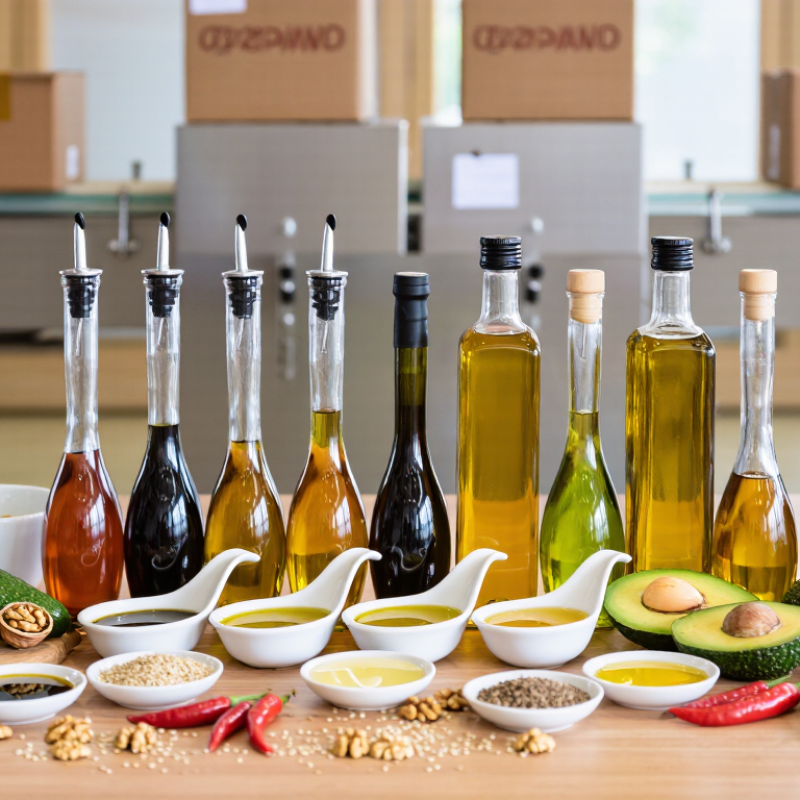
Gourmet Oil Manufacturing in China: Industry Scope and Product Types
China’s gourmet oil industry covers seed selection, pressing, refining, bottling, and export compliance. USDA’s Oilseeds: World Markets and Trade report estimates China’s 2024/25 vegetable-oil consumption at more than 35 million metric tons. Most volume comes from cooking oils, but premium products serve restaurants, specialty retailers, and health-focused households.
Product types vary by region and processing method. Cold-pressed sesame, peanut, walnut, flaxseed, and camellia oils offer distinct aromas and darker natural colors. Refined rapeseed and soybean oils provide stable supply and consistent performance. Olive oil is also imported, bottled, or blended in China, although origin labeling requires careful review. Some factories use low-temperature pressing, nitrogen flushing, and dark glass bottles. These details can protect flavor, but they also increase production costs.
Tips: Global buyers should request recent laboratory reports, pesticide screening, fatty-acid profiles, and traceability records. Check whether “cold-pressed” describes the entire process or only the first pressing stage. This distinction matters. FAO food-safety guidance supports transparent controls, yet documentation can still differ between suppliers. Factory visits are useful, but one visit cannot prove every batch is identical. Gourmet oil manufacturing is expanding, though quality consistency remains an area requiring honest evaluation.
| No. | Product Type | Primary Raw Material | Common Manufacturing Methods | Typical Culinary Uses | Key Quality Indicators | Common Export Packaging | Buyer Considerations |
|---|---|---|---|---|---|---|---|
| 1 | Peanut Oil | Selected peanuts, mainly high-oil-content varieties | Expeller pressing, solvent extraction followed by refining, or roasted peanut pressing for stronger flavor | Stir-frying, deep-frying, sauces, marinades, and Chinese-style cooking | Free fatty acids, peroxide value, moisture, aflatoxin control, flavor profile, and traceability | Glass bottles, PET bottles, metal tins, bag-in-box, and bulk flexitanks | Allergen declaration, aflatoxin testing, oxidation protection, and compliance with the destination market |
| 2 | Sesame Oil | White or black sesame seeds | Cold pressing, roasted-seed pressing, hydraulic pressing, or refined processing | Dressings, dipping sauces, noodle dishes, finishing oil, and flavor enhancement | Sesame aroma, sesamol-related flavor characteristics, peroxide value, purity, and sediment level | Small glass bottles, PET bottles, tins, and food-service containers | Roasted and unroasted versions serve different markets; allergen labeling is essential |
| 3 | Camellia Seed Oil | Seeds of oil-bearing Camellia species | Seed cleaning, drying, cold pressing, filtration, and optional mild refining | Salad dressings, low-to-medium heat cooking, gourmet finishing, and specialty food products | Oleic-acid content, acidity, peroxide value, clarity, and absence of adulteration | Dark glass bottles, tins, premium gift packaging, and bulk food-grade drums | Light-sensitive packaging and botanical identification documentation help support premium positioning |
| 4 | Walnut Oil | Walnut kernels and walnut processing by-products suitable for food use | Low-temperature pressing, filtration, and limited refining to preserve delicate flavor | Cold dishes, salad dressings, baking, desserts, and finishing applications | Freshness, peroxide value, polyunsaturated-fatty-acid profile, flavor, and sediment | Dark glass bottles, small PET bottles, tins, and refrigerated specialty packs | Highly oxidation-sensitive; nitrogen flushing, dark packaging, and controlled storage are recommended |
| 5 | Flaxseed Oil | Food-grade flaxseeds, also known as linseeds | Cold pressing, fine filtration, nitrogen protection, and refrigerated filling when required | Salads, smoothies, dips, nutrition products, and no-heat applications | Alpha-linolenic acid content, peroxide value, freshness, moisture, and absence of off-odors | Opaque glass bottles, metal tins, oxygen-barrier pouches, and small-volume containers | Usually marketed as a refrigerated or low-temperature product because of its high polyunsaturated-fat content |
| 6 | Rice Bran Oil | Rice bran generated during rice milling | Stabilization of bran, solvent extraction or pressing, winterization, and refining | Stir-frying, baking, frying, food-service cooking, and blended oil formulations | Oryzanol content, fatty-acid profile, acidity, peroxide value, color, and refining consistency | PET bottles, HDPE containers, metal tins, drums, and bulk flexitanks | Stable supply depends on bran freshness and rapid stabilization after rice milling |
| 7 | Grapeseed Oil | Grape seeds recovered from wine and juice processing | Solvent extraction or mechanical pressing, followed by refining and deodorization | Salads, baking, sautéing, mayonnaise, and neutral-flavor food applications | Neutral taste, light color, acidity, peroxide value, fatty-acid profile, and solvent-residue compliance | PET bottles, glass bottles, tins, drums, and food-grade bulk containers | Buyers should verify raw-material origin, extraction method, refining specifications, and oxidation controls |
| 8 | Perilla Seed Oil | Perilla seeds, traditionally used in East Asian cuisine | Cold pressing, filtration, and oxygen-controlled filling | Seasoning, salads, dipping sauces, nutrition products, and cold dishes | Alpha-linolenic acid content, peroxide value, freshness, color, and distinctive aroma | Dark glass bottles, small tins, oxygen-barrier bottles, and specialty retail packs | Requires strong light and oxygen protection; product claims must follow the importing country’s rules |
| 9 | Corn Oil | Corn germ separated during corn milling | Expeller pressing or solvent extraction, refining, winterization, and deodorization | Frying, baking, sauces, snack production, and household cooking | Refined color, acidity, peroxide value, moisture, fatty-acid profile, and winterization stability | PET bottles, HDPE jerry cans, metal tins, drums, and bulk tank shipments | Suitable for larger-volume food manufacturing; buyers should specify refining and winterization requirements |
| 10 | Blended Gourmet Oil | Two or more edible oils, such as sesame, peanut, rice bran, or camellia seed oil | Separate oil processing followed by controlled blending, filtration, and filling | Cooking oils, salad dressings, food-service products, and customized culinary formulations | Blend ratio, fatty-acid profile, sensory consistency, acidity, peroxide value, and batch uniformity | PET bottles, glass bottles, tins, bag-in-box, drums, and bulk flexitanks | Contract specifications should define ingredient percentages, allergen controls, labeling, and permitted claims |
Selection relies on evidence, not popularity or attractive catalog language. Reviewers examine production history, oilseed sourcing, refining methods, export records, and traceability. No score is final.
Request product specifications, certificates of analysis, shelf-life data, and batch records. The samples should come from the same production line. Recent documents matter more.
Check acid value, peroxide value, moisture, fatty-acid profile, and contaminants. Pesticide residue testing may also match destination-market requirements. Independent results are stronger evidence.
Confirm the certificate number, audit scope, expiry date, and facility address. Check whether the document covers the actual production site. A polished PDF proves little.
Ask for three samples from separate batches. Compare aroma, color, sediment, seal quality, and oxidation during controlled storage. Small differences can expose blending problems.
Review storage temperatures, filling hygiene, packaging strength, sanitation records, and recall procedures. Video inspections and site visits can reveal practical weaknesses. They cannot replace batch testing.
Dark glass or oxygen-reduced containers may protect delicate oils during long transit. Check backup ports, raw-material plans, freight risks, and delivery communication. Delays need clear explanations.
Price should not decide alone. Compare quality evidence, compliance readiness, capacity, service reliability, and logistics planning. Very low prices deserve closer questions.
No manufacturer is perfect, and some records may remain incomplete. Scores should change after new audits, complaints, or test results. I would also challenge my own checklist.
China’s Gourmet Oil industry offers global buyers a broad range of products, including extra virgin olive oil, sesame oil, walnut oil, avocado oil, grapeseed oil, and other specialty edible oils. This overview explains how leading Chinese manufacturers are evaluated through product quality, processing technology, raw material sourcing, production capacity, innovation, customer service, and international market experience. It also presents practical profiles of the top ten manufacturers without focusing on brand promotion, helping readers understand their different strengths and product categories.
The article further examines quality standards, food safety controls, certifications, packaging options, traceability systems, and export capabilities. For international buyers, it provides a structured approach to comparing suppliers, reviewing technical documents, verifying compliance with destination-market requirements, assessing sample quality, and negotiating reliable supply terms. By considering both manufacturing performance and sourcing transparency, buyers can make informed decisions and identify suitable Chinese Gourmet Oil partners for foodservice, retail, and private-label applications.

 Baking Supplies