Choosing the right Food Packaging supplier can shape product safety, shelf life, and customer trust. Global buyers face a crowded market, with manufacturers offering cartons, pouches, trays, bottles, and flexible films. Each option has different performance requirements. A frozen meal needs strong seals and moisture resistance. Fresh produce often needs airflow and careful temperature control. The cheapest quotation may not deliver the lowest total cost.
This guide examines leading Food Packaging suppliers through practical purchasing criteria. We consider material quality, production capacity, customization, minimum order quantities, and delivery reliability. Compliance documentation also matters. Buyers should request food-contact declarations, migration test results, traceability records, and relevant quality certifications. Requirements vary between markets, so a supplier’s familiar certificate may not satisfy every destination. Verify details independently.
Real sourcing experience shows that communication can matter as much as machinery. A responsive supplier explains tolerances, printing limits, tooling fees, and production schedules clearly. Samples should be tested with the actual product, filling process, and storage conditions. A pouch that looks excellent on a desk may fail during transport. Small details matter.
Sustainability claims deserve careful review. Recyclable, compostable, and recycled-content packaging can involve different facilities and regional limitations. Ask for evidence rather than relying on attractive language. No ranking is perfect. Supplier performance can change with capacity, materials, and logistics conditions. The goal is not simply to find a famous company, but to identify a dependable partner that fits your product, market, budget, and long-term responsibilities.
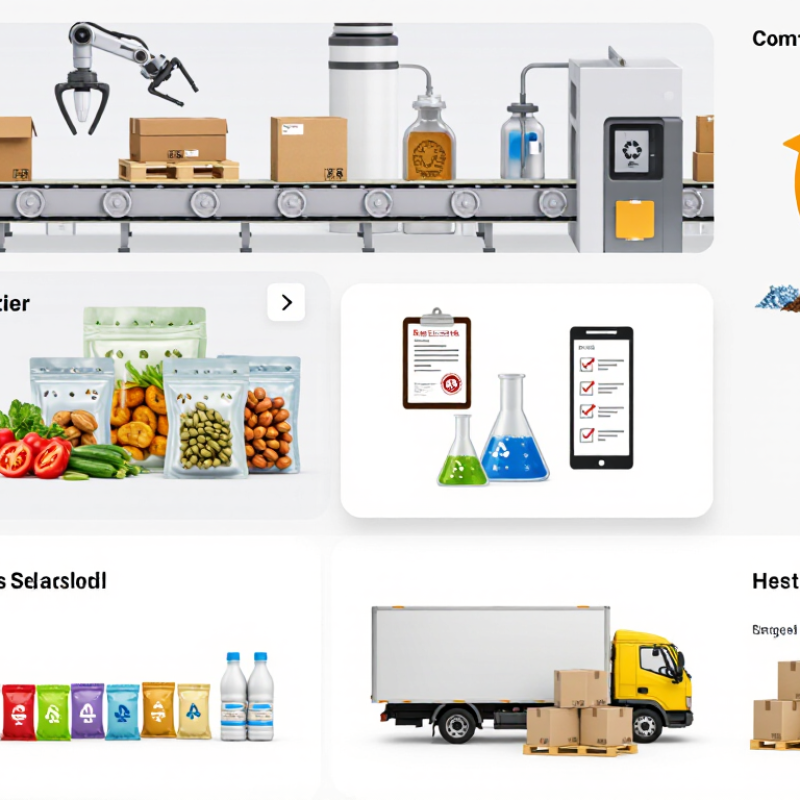
Top Food Packaging Suppliers for Global Buyers?
A leading food packaging supplier proves performance beyond a polished catalogue. It understands filling lines, cold storage, transport shocks, and local recycling limits. Practical experience matters. A technically attractive pouch can fail beside a hot sealing jaw.
Reliability begins with measurable controls. Suppliers should provide food-contact compliance documents, batch traceability, migration testing, and clear change notifications. Independent audits strengthen credibility. The United Nations Environment Programme reported that 1.05 billion tonnes of food were wasted in 2022. Packaging cannot solve waste alone, but better barrier protection and accurate portion formats can reduce avoidable losses. The Food and Agriculture Organization also estimates that 13.2% of food is lost before retail. These figures make shelf-life engineering commercially important, not decorative.
Consistency matters more than impressive samples. A serious supplier tests seal strength, oxygen transmission, moisture resistance, and drop performance under realistic conditions. It should share results, limits, and corrective actions honestly. No supplier is perfect. That is worth admitting. Buyers should examine factory capacity, backup materials, lead times, and regional support before signing contracts. A low unit price may hide higher damage rates or difficult recycling. The strongest partner offers evidence, not confident promises. Yet even strong evidence needs periodic review, because regulations, equipment, and customer expectations change.
Material recovery performance is an important benchmark for global food packaging buyers. The chart shows the 2022 recycling rates for major packaging materials in the European Union, based on Eurostat data.
Source: Eurostat, Packaging waste by waste management operations, 2022. Higher recycling rates can indicate stronger circularity potential when evaluating packaging materials and suppliers.
Food packaging suppliers serve global buyers through several core material groups. Flexible packaging often uses plastic films, laminates, and high-barrier pouches. These options are light, sealable, and suitable for snacks, coffee, sauces, and frozen foods. Film thickness matters. A thin layer can reduce cost, but it may tear during transport.
Paper and paperboard remain practical for cartons, sleeves, trays, and takeaway containers. They provide a printable surface and a familiar natural appearance. However, moisture can weaken untreated paper quickly. Coatings improve resistance, yet they may affect recycling routes. Buyers should check the full material structure, not only the outer layer.
Rigid packaging includes glass jars, metal cans, and plastic tubs or bottles. Glass protects flavor well and feels substantial on a retail shelf. Metal offers strong protection from light and oxygen. Plastic containers reduce breakage and shipping weight. Product categories require different features: fresh produce needs ventilation, liquids need reliable closures, and ready meals need heat resistance. Experienced suppliers should provide specifications, sample testing, sealing data, and traceability records. Food-contact compliance must be verified for the destination market. Testing in a real distribution environment is wiser than trusting a sample alone. No format is perfect. A package may perform well in the factory but fail after temperature changes, vibration, or careless stacking.
| Packaging Material | Common Product Categories | Typical Formats | Key Performance Features | Typical Food Applications | Recycling or Recovery Route | Global Buyer Evaluation Points |
|---|---|---|---|---|---|---|
| Corrugated Fiberboard | Transport packaging and secondary cartons | Regular slotted cartons, trays, shelf-ready cases, divider systems | High stacking strength, low weight, printable surface, cushioning from fluting | Fresh produce, dry groceries, beverage multipacks, frozen-food shipping cases | Widely recyclable through established paper-recovery systems when clean and dry | Board grade, edge-crush strength, moisture resistance, flute profile, pallet efficiency |
| Paperboard and Folding Carton Board | Retail cartons and consumer-facing packs | Folding cartons, sleeves, wraps, lidded cartons, paper trays | Good stiffness, graphics quality, die-cutting performance and shelf presentation | Cereals, confectionery, tea, frozen foods, dry mixes and bakery products | Generally recyclable if coatings, laminates and food contamination are compatible with local systems | Basis weight, caliper, moisture resistance, coating type, print quality and food-contact compliance |
| Flexible Polyethylene (PE) | Flexible films, pouches and liners | Stand-up pouches, sachets, shrink films, liners, bags and sealant layers | Excellent heat-sealing, toughness, moisture barrier and puncture resistance | Frozen foods, snacks, fresh produce, powders, sauces and bulk ingredients | Recyclability depends on structure, thickness, collection infrastructure and mono-material design | Film structure, seal temperature, coefficient of friction, oxygen transmission and downgauging capability |
| Polypropylene (PP) | Rigid containers and heat-resistant flexible packaging | Cups, tubs, hinged containers, retort structures, films and caps | Good moisture resistance, stiffness, fatigue resistance and relatively high heat tolerance | Yogurt, ready meals, deli foods, sauces, snacks and microwaveable products | Rigid PP is accepted in some recycling systems; flexible PP collection varies significantly by market | Hinge durability, heat distortion, seal integrity, clarity, wall thickness and food-contact regulations |
| Polyethylene Terephthalate (PET) | Transparent bottles, trays and thermoformed packs | Bottles, clamshells, trays, lidding films and transparent containers | High clarity, strength, dimensional stability and useful gas-barrier performance | Water, beverages, edible oils, fresh foods, bakery items and prepared meals | Widely collected for mechanical recycling in many markets; design should support sorting and reprocessing | Recycled-content availability, intrinsic viscosity, tray-versus-bottle recyclability, clarity and closure compatibility |
| Aluminum Foil and Metallized Laminates | High-barrier flexible packaging | Retort pouches, sachets, lidding structures, coffee packs and pharmaceutical-style food packs | Very strong light, oxygen and moisture barrier; supports extended shelf life | Coffee, powdered foods, sauces, pet food, processed meals and sensitive ingredients | Aluminum is recyclable, but multi-layer flexible laminates are often difficult to recycle in conventional systems | Barrier target, laminate structure, pinhole resistance, retort performance, seal strength and end-of-life pathway |
| Glass | Rigid primary containers | Jars, bottles, vials, beverage containers and portion packs | Excellent barrier, inertness, transparency and resistance to odor transfer | Sauces, preserves, baby food, beverages, dairy products and premium ingredients | Highly recyclable where collection and color-sorting infrastructure is available | Breakage rate, container weight, thermal-shock resistance, closure fit, pallet protection and return logistics |
| Steel and Tinplate | Metal cans and food containers | Three-piece cans, two-piece cans, tins, pails and easy-open containers | High mechanical strength, hermetic sealing, light protection and long shelf-life support | Canned vegetables, seafood, meat, soups, infant foods and dry products | Widely recyclable through ferrous-metal collection and magnetic separation | Coating compatibility, corrosion resistance, can dimensions, seam quality, sterilization and empty-container weight |
| Molded Fiber and Pulp | Fiber-based trays and protective packaging | Egg cartons, produce trays, molded inserts, bowls and protective packs | Renewable-fiber basis, cushioning, nesting efficiency and natural appearance | Eggs, fresh produce, takeaway foods, bakery products and protective secondary packaging | Often recyclable or compostable depending on coatings, additives, contamination and local facilities | Wet strength, oil and water resistance, fiber source, forming tolerances, hygiene controls and local recovery options |
| Biobased or Compostable Polymers | Specialty flexible films, coated paper and food-service items | Films, pouches, cups, lids, coated papers and compostable serviceware | Can provide renewable feedstock content or designed compostability for selected uses | Dry foods, produce bags, food-service packaging and short-life applications | Industrial compostability is facility-dependent; not automatically recyclable or home-compostable | Applicable certification, composting access, shelf-life requirements, heat resistance, contamination risk and labeling rules |
Global buyers should evaluate suppliers beyond attractive catalogs and low quotations. A reliable supplier explains material structure, production limits, and quality controls in plain language. Ask for samples that match your intended product, filling temperature, storage period, and shipping conditions. A package that looks strong in a showroom may fail after weeks in a humid warehouse.
Review factory experience, testing records, traceability, and corrective-action procedures. Confirm whether the supplier can maintain consistent dimensions, sealing strength, printing quality, and food-contact compliance across repeated orders. Check production capacity against your forecast, not only your first purchase. A low minimum order can hide unstable planning. Clear communication matters too. Slow answers often become costly delays later.
Tips: Request recent test reports and a sample approval record. Ask how rejected materials are separated and documented. Verify lead times using a written production schedule. Compare at least three quotations, but question unusually low prices. Discuss backup materials before shortages occur. A virtual tour helps, yet an independent audit may reveal more. Do not rely only on certificates; check their issuing body and validity. Sustainability claims also need evidence, such as recycled-content records or waste-reduction data. My own evaluation would include a trial order, because paperwork cannot reveal every production weakness. Even experienced buyers can overlook small details, especially carton labeling and pallet protection. That is worth admitting.
Reliable food packaging suppliers should provide current food-contact compliance documents for each material and intended use. These records should identify the polymer, coating, ink, adhesive, and production site. A general certificate is rarely enough. In supplier audits, I check whether documents match the actual product, thickness, and manufacturing location. Small mismatches can delay customs clearance or trigger additional laboratory testing.
Safety evidence should include migration testing under realistic conditions. Test plans must reflect hot filling, freezing, oily foods, acidity, and storage time. Suppliers should also demonstrate Good Manufacturing Practice and a documented hazard-control system. Traceability matters. Ask for batch codes, retained samples, cleaning records, and a recall procedure. Fast answers help, but complete records matter more.
Regulations vary by destination. A package approved for one market may need different declarations elsewhere. Buyers should request material specifications, allergen-control procedures, recycled-content evidence, and statements about restricted substances. Certificates also require review dates. Old documents create hidden risk. I have seen buyers trust a logo or a one-page statement without checking laboratory scope. That approach feels efficient, but it can fail during an audit. Supplier evaluations should include factory visits, independent testing, and corrective-action records. No supplier is perfect. The stronger ones admit gaps and show how they fix them.
For global buyers, food packaging costs extend beyond the unit price. A carton may look inexpensive, yet printing plates, inner liners, and export pallets can change the landed cost. Ask suppliers for a full quote covering materials, tooling, inspection, loading, and destination delivery. Request samples from the same production line. Photos can hide weak seals.
Long-term service starts before the purchase order. Reliable suppliers explain material grades, barrier performance, food-contact documentation, and expected shelf life. They should also state tolerances clearly. During sourcing reviews, compare sample dimensions with machine settings. A two-millimeter variation can slow filling and create waste. That detail is easy to miss.
Logistics deserves equal attention. Confirm carton dimensions, container loading plans, moisture protection, and backup routes before production begins. Sea freight may reduce costs, but delays can damage seasonal launches. Air freight solves urgency, not poor planning. Keep safety stock when demand is uncertain. Forecasts can fail. That mistake is expensive, but useful. Service quality appears when a supplier reports defects quickly, proposes corrective action, and keeps records across repeat orders. Evaluate response times, replacement terms, audit access, and capacity during peak months. A low price matters less when communication disappears after payment.
Reliability means consistent production, clear records, and practical testing. A supplier should understand sealing jaws, cold storage, transport shocks, and local recycling limits.
Request food-contact compliance documents, migration test results, batch traceability, and change notifications. Independent audit reports add useful confidence.
Strong barriers help limit oxygen, moisture, and flavor loss. This can protect shelf life and reduce avoidable food waste. Packaging cannot solve every waste problem.
Suppliers should test seal strength, oxygen transmission, moisture resistance, and drop performance. Tests should reflect real shipping conditions. Factory samples can mislead.
Plastic films, laminates, and high-barrier pouches suit snacks, coffee, sauces, and frozen foods. Film thickness matters. A thin layer may tear during transport.
Paper and paperboard offer printable surfaces for cartons, sleeves, trays, and containers. Untreated paper can weaken quickly near moisture. Coatings improve resistance but may complicate recycling.
Glass protects flavor but adds weight and breakage risk. Metal blocks light and oxygen effectively. Plastic containers reduce shipping weight and breakage.
No. Test samples after temperature changes, vibration, stacking, and actual filling conditions. A package may look excellent yet fail beside a hot sealing jaw.
Compare unit price with damage rates, lead times, backup materials, and recycling difficulty. The cheapest option may cost more later. I would review the decision periodically.
Choosing the right Food Packaging supplier is essential for businesses serving global markets. A leading supplier should offer consistent quality, reliable production capacity, flexible customization, responsive communication, and a proven ability to meet different customer requirements. Product options may include flexible films, pouches, cartons, trays, containers, labels, and protective materials, with selections based on product type, shelf life, transportation conditions, and sustainability goals.
Global buyers should evaluate suppliers through verified certifications, documented quality systems, material safety information, and compliance with relevant food-contact and import requirements. It is also important to compare total costs rather than unit prices alone, including tooling, minimum order quantities, shipping, customs coordination, lead times, and storage needs. Suppliers that provide stable logistics, transparent pricing, technical support, quality control, and dependable after-sales service can help reduce risks and build stronger long-term partnerships.

Baking Supplies